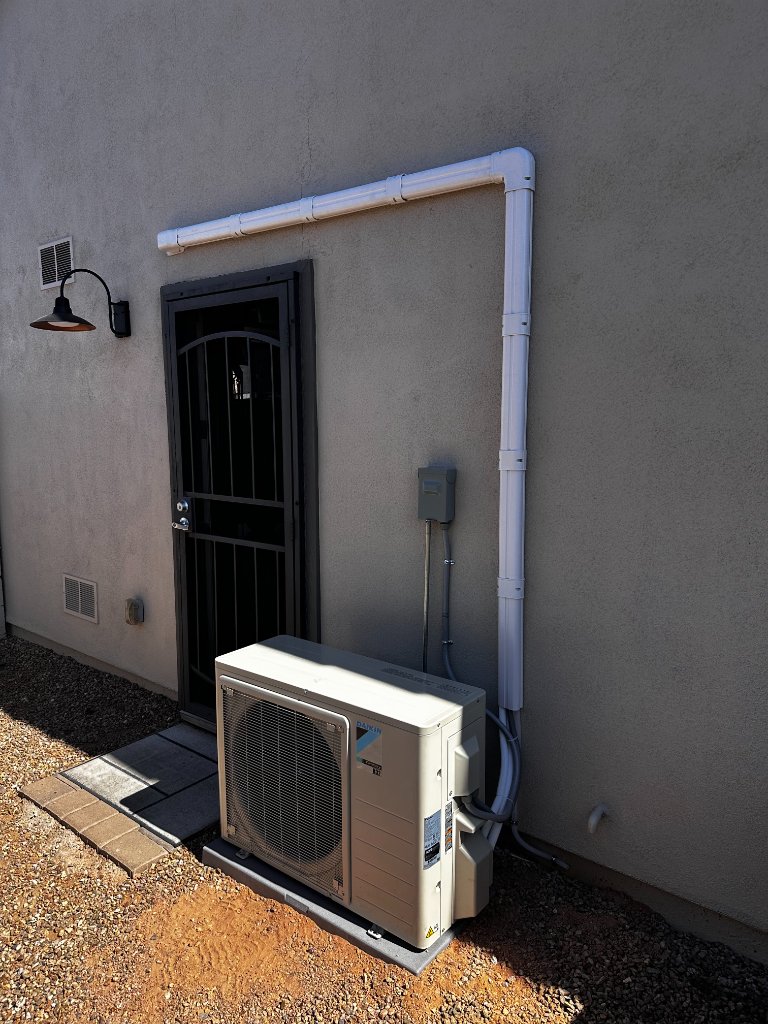
Modern mini-splits are smart systems with built-in diagnostics. When something goes wrong, the system detects it, shuts down to protect itself from damage, and displays an error code on the indoor unit or remote. That code is essentially your system's way of telling you exactly what the problem is — if you know how to read it.
The challenge is that every brand uses a different coding system. Daikin, Mitsubishi, LG, Fujitsu, and other manufacturers each have their own error code libraries. A code like 'E1' means something entirely different on a Daikin than it does on an LG. That's why the first thing we ask when you call is to read us the exact code or describe the blinking pattern — it tells us exactly which component or system to test.
If your mini-split is showing an error code, try one hard reset first: turn the unit off at the breaker for five full minutes, then turn it back on. Sometimes this clears temporary glitches. But if the code comes right back, don't keep resetting it. The system is detecting a real problem, and repeated restart attempts can cause further damage to compressors, control boards, and motors.
Signs Your Mini-Split Has This Problem
If you're experiencing mini-split error codes, you'll typically notice one or more of the following:
- A code like E1, E2, E3, F1, P1, etc. appears on the indoor unit display
- Lights on the indoor unit are blinking in a pattern
- The unit stops working and shows an error code
- The remote displays an error message
- The outdoor unit's LED indicator is flashing
- The unit beeps repeatedly and won't respond to commands
What Causes Mini-Split Error Codes?
Understanding the root cause is the first step toward fixing it. Here are the most common reasons we see mini-split error codes in mini-split systems across the Phoenix Valley:
Sensor Failures
Temperature sensors, pipe sensors, and discharge temperature sensors can fail or drift out of calibration, triggering error codes related to incorrect readings.
Communication Errors
Error codes often indicate a communication failure between the indoor and outdoor units — caused by damaged wiring, loose connections, or a failing control board.
Refrigerant Pressure Issues
Many systems monitor refrigerant pressure. Codes related to pressure can indicate leaks, overcharging, or a faulty pressure switch.
Motor or Compressor Faults
Error codes may point to a failed indoor fan motor, outdoor fan motor, or compressor. The system detects abnormal current draw or rotation and shuts down to protect itself.
Drainage Problems
Some units have float switches that trigger an error code when the drain pan overflows due to a clogged drain line.
Power or Voltage Issues
Error codes related to power indicate voltage irregularities, phase loss, or power supply problems that need electrical diagnosis.
Simple Things You Can Check First
Before calling a technician, there are a few safe and simple checks you can do yourself. These won't fix every problem, but they rule out the easy stuff — and they're free:
- Write down the exact error code or count the number of blinks — this helps the technician come prepared
- Try turning the unit off at the breaker for 5 minutes, then back on — sometimes a code clears after a hard reset
- Check your owner's manual — many include a code reference chart for your specific model
- Take a photo of the error code or blinking pattern to show the technician
Safety note: Do not open the unit or attempt electrical or refrigerant repairs yourself — those require a licensed professional.
How Our Technicians Fix It
When you call Core Comfort HVAC, our licensed technicians will diagnose the exact cause and recommend the right fix. Here's how we approach mini-split error codes:
Code-Specific Diagnosis
We look up the specific error code for your brand and model, then perform targeted testing on the component or system the code references.
Sensor Testing & Replacement
Faulty sensors are tested for resistance values and replaced if out of spec, restoring accurate temperature control.
Communication Line Repair
We inspect and repair the communication wiring between indoor and outdoor units, or replace failing control boards.
Refrigerant System Service
For pressure-related codes, we check for leaks, repair them, and recharge the system to proper levels.
Motor & Compressor Replacement
When codes indicate motor or compressor failure, we test the components and replace them with quality parts.
Drain Line Clearing
For drainage-related codes, we clear the blockage and ensure the drain pan float switch operates correctly.
When to Call a Professional
If a hard reset (powering off at the breaker for 5 minutes) doesn't clear the error code, call us. Error codes indicate the system has detected a problem and is protecting itself from damage. Continuing to reset the unit without fixing the underlying issue can lead to more expensive repairs.
Frequently Asked Questions
Are error codes the same for all mini-split brands?
No. Daikin, Mitsubishi, LG, Fujitsu, and other brands each have their own code systems. That's why it's important to write down the exact code — we look it up for your specific brand and model.
Should I keep resetting my unit when it shows an error code?
A single hard reset (power off at the breaker for 5 minutes) is fine to try. But if the code comes back, don't keep resetting it. The system is detecting a real problem, and repeated restart attempts can cause further damage.
Can I find error code meanings online?
You can often find code definitions in your owner's manual or the manufacturer's website. However, knowing what a code means is different from being able to fix it — most require professional tools and refrigerant handling certification.